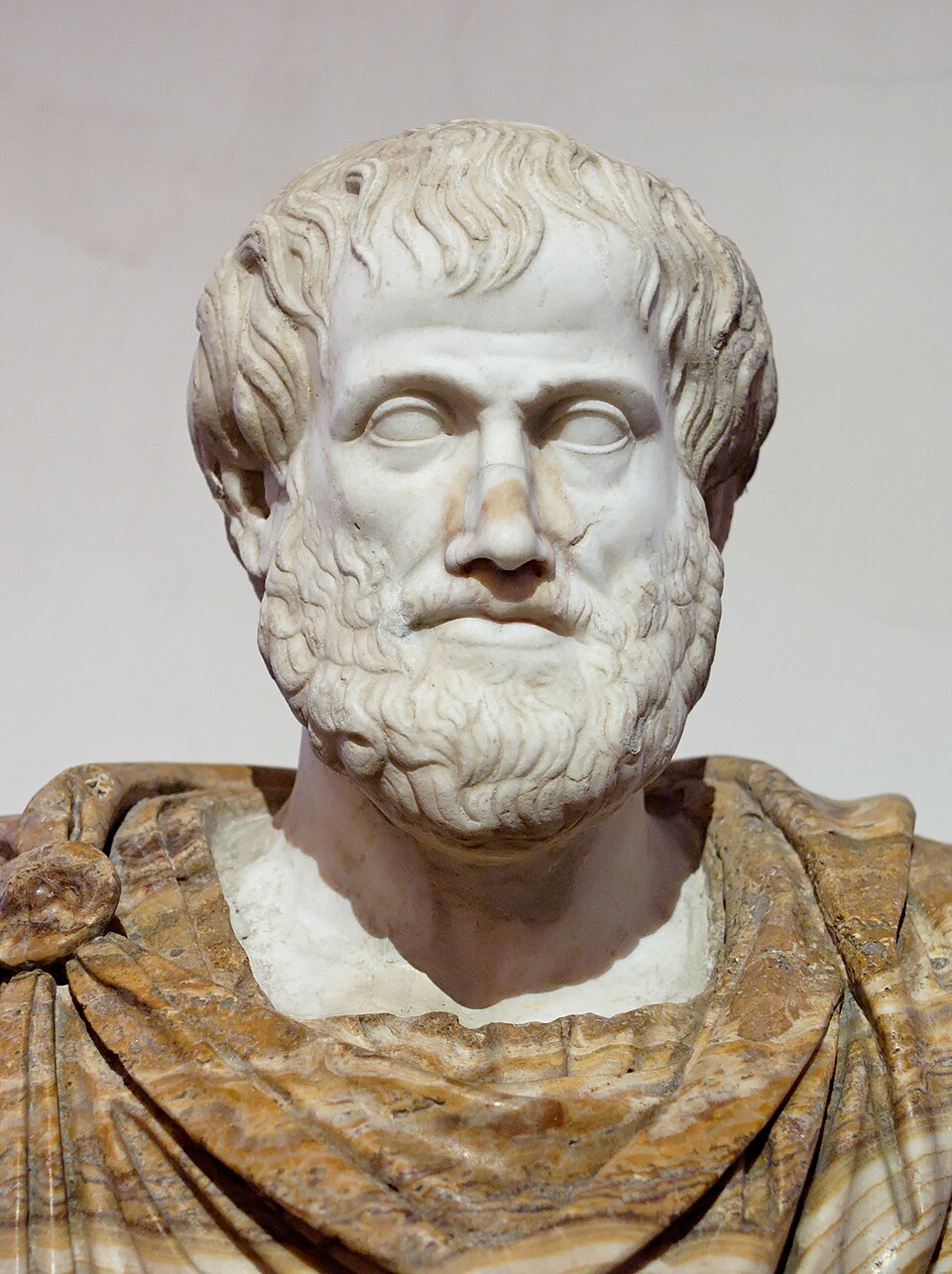
Peripatetic Philosophy·340 BCE
Nicomachean Ethics
The foundational text of Western virtue ethics. Investigates the nature of the good life through the practice of virtues.
Find on Amazon JP →Passages from this book
178 passagesThe account of Virtue and Vice hitherto given represents rather what men _may be_ than what they _are_.
Book 7, Section 1·philosophy, Ethics, Wisdom
Actions of Lust are wrong actions done with pleasure, Wrong actions done with pleasure are more justly objects of wrath, Such as are more justly objects of wrath are more unjust, Actions of Lust are more unjust.
Book 7, Section 15·philosophy, Ethics, Wisdom
The aim of it is the acquisition and propagation of a certain kind of knowledge (science), but this knowledge and the thinking which brings it about are subsidiary to a practical end.
Book 1, Section 1·philosophy, Ethics, self-improvement
"For in all the habits which we have expressly mentioned, as likewise in all the others, there is, so to speak, a mark with his eye fixed on which the man who has Reason tightens or slacks his rope; and there is a certain limit of those mean states which we say are in accordance with Right Reason, and lie between excess on the one hand and defect on the other."
Book 6, Chapter I·philosophy, Ethics, Wisdom
All human life involves an ideal element—something which it is not yet and which under certain conditions it is to be.
Book 1, Section 1·philosophy, Ethics, Wisdom
All virtue is in Justice comprehended.
Book 5, Section 2·philosophy, Ethics, Wisdom
"Are we then to break with him instantly? not in all cases; only where our friends are incurably depraved; when there is a chance of amendment we are bound to aid in repairing the moral character of our friends even more than their substance."
Book 9, Chapter III·philosophy, Ethics, Wisdom
Because he is destitute of these minor springs of action, which are intended to supply the defects of the higher principle.
Book 3, Section 1·Ethics, Wisdom
Call no man happy till he is dead.
Book 10, Section 32·philosophy, Wisdom, self-improvement
The capital defect in Aristotle’s eyes, who being eminently practical, could not like a theory which not only did not necessarily lead to action, but had a tendency to discourage it by enabling unreal men to talk finely.
Book 8, Section 14·philosophy, Ethics, self-improvement
The cases of faulty action will be, either when the Machinery is perfect but wrongly directed, as in the case of a deliberate crime, or when the direction given by the Reason is right but the Will does not move in accordance with that direction.
Book 6, Section 6·philosophy, Ethics, Wisdom
"A certain degree of fear is necessary to the formation of true courage."
Book 2, Section 6·philosophy, Ethics, Wisdom
Character, good or bad, is produced by what Aristotle calls 'habituation,' that is, it is the result of the repeated doing of acts which have a similar or common quality.
Book 1, Section 4·philosophy, Ethics, self-improvement
"Coercion and ignorance of relevant circumstances render acts involuntary and exempt their doer from responsibility, otherwise the act is voluntary and the agent responsible."
Book 3, Section 1·philosophy, Ethics, Wisdom
The conception of the end of man or a life lived for truth—of a life blissfully absorbed in the vision of truth—is a lofty and inspiring one.
Book 7, Section 4·philosophy, Ethics, Wisdom
Conscience and Self-Love, if we understand our true happiness, always lead us the same way.
Book 1, Section 18·philosophy, Ethics, Wisdom
In Coronea in Bœotia, on the occasion of the citadel being betrayed to some Phocians.
Book 6, Section 22·philosophy, Wisdom, strategy
"Deliberation involves thinking, thinking out means to ends: in deliberate acts the whole nature of the agent consents to and enters into the act, and in a peculiar sense they are his, they are him in action."
Book 3, Section 2·philosophy, Ethics, Wisdom
The desire of pleasure is not only insatiable, but indiscriminate in its objects.
Book 1, Section 3·philosophy, Ethics, Wisdom
By the difference of tense it seems Aristotle has mixed up two things, beginning to speak of the particular instance, and then carried into the general statement again.
Book 6, Section 23·philosophy, Wisdom, self-improvement
The directness of such apprehension makes it analogous to sensation or sense-perception; but it is on his view in the end due to the existence or activity in man of that power in him which is the highest thing in his nature, and akin to or identical with the divine nature—mind, or intelligence.
Book 6, Section 4·philosophy, Ethics, Wisdom
Distributive justice is concerned not with the large question of the distribution of political power and privileges among the constituent members or classes of the state but with the smaller questions of the distribution among those of casual gains.
Book 5, Section 3·philosophy, Ethics, Wisdom
By doing just actions we come to be just; by doing the actions of self-mastery we come to be perfected in self-mastery; and by doing brave actions brave.
Book 2, Section 1·philosophy, Ethics, self-improvement
"Doing well by others is more characteristic of virtue than being done well by, and doing things positively honourable than forbearing to do things dishonourable."
Book 4, Section 1·Ethics, Wisdom
Each term is important to make up the character of Justice, men must have the capacity, do the acts, and do them from moral choice.
Book 5, Section 1·philosophy, Ethics, Wisdom
The End does not sanctify the Means.
Book 1, Section 37·philosophy, Ethics, Wisdom
"It is an error then to aim at their extirpation. It is true that in a perfect moral state emotion will be rare, but then this will have been gained by regular process."
Book 2, Section 7·philosophy, Ethics, Wisdom
Every action has two beginnings, that of Resolve and that of Action.
Book 1, Section 4·philosophy, Ethics, Wisdom
Every art, and every science reduced to a teachable form, and in like manner every action and moral choice, aims, it is thought, at some good: for which reason a common and by no means a bad description of the Chief Good is, “that which all things aim at.”
Book 1, Section 1·philosophy, Ethics, Wisdom
Every unjust act embodies [Greek: to adikon], which is a violation of [Greek: to ison], and so implies a greater and a less share, the former being said to fall to the doer, the latter to the sufferer, of injury.
Book 3, Section 20·philosophy, Ethics, Wisdom
"To exceed in giving and in forbearing to receive is no sign of badness or meanness, but only of folly."
Book 4, Section 2·Ethics, Wisdom
"The fact that all animals, brute and human alike, pursue Pleasure, is some presumption of its being in a sense the Chief Good;"
Book 7, Section 14·philosophy, Ethics, Wisdom
The faculty which guides us truly in all matters of Moral Action is phronesis, i.e. Reason directed by Goodness or Goodness informed by Reason.
Book 1, Section 41·philosophy, Ethics, Wisdom
The first, which apprehends the eternal laws of the universe, has no direct relation to human conduct: the second is identical with that master science of human life of which the whole treatise, consisting of the Ethics and the Politics, is an exposition.
Book 6, Section 1·philosophy, Ethics, Wisdom
The force which leads to the wrong act is not blind or ignorant passion, but always has some reason in it.
Book 7, Section 4·philosophy, Wisdom, self-improvement
In the former case he is the best judge who has thorough acquaintance with that art or science, in the latter, the man whose powers have been developed and matured by education.
Book 1, Section 2·philosophy, Ethics, self-improvement
"The Friendship based upon the moral character of the parties, being independent and disinterested, is permanent."
Book 9, Chapter I·philosophy, Ethics, Wisdom
Friendship helps the young to keep from error: the old, in respect of attention and such deficiencies in action as their weakness makes them liable to; and those who are in their prime, in respect of noble deeds.
Book 8, Section 1·philosophy, Ethics, Wisdom
Friendship seems to be the bond of Social Communities, and legislators seem to be more anxious to secure it than Justice even.
Book 8, Section 1·philosophy, Ethics, Wisdom
Friendship then under these circumstances is permanent, as we should reasonably expect, since it combines in itself all the requisite qualifications of friends.
Book 8, Section 5·philosophy, Ethics, Wisdom
Good counsel has reference not merely to the grand End, but to the subordinate Ends which phronesis selects as being right means to the Grand End of all.
Book 1, Section 38·philosophy, Ethics, Wisdom
The good life is one that is in accordance with virtue, and pleasure is a natural accompaniment to this life.
Book 10, Section 3·philosophy, Ethics, self-improvement
"The good for man is an activity of the soul in accordance with virtue, in a complete life."
Book 10, Section 1·philosophy, Ethics, Wisdom
Goodness always implies the love of itself, an affection to goodness.
Book 10, Section 25·philosophy, Wisdom, Ethics
Good training in habits will either work principles into our nature, or make us capable of accepting them as soon as they are put before us.
Book 1, Section 5·philosophy, Ethics, Wisdom
The Great man will have a right to look for more Friendship than he bestows, but the Good man can feel Friendship only for, and in proportion to, the goodness of the other.
Book 8, Section 5·philosophy, Ethics, Wisdom
The [Greek: enkrates] is he who has bad or unruly appetites, but whose reason is strong enough to keep them under.
Book 1, Section 43·philosophy, Ethics, self-improvement
[Greek: phronæsis] is here used in a partial sense to signify the Intellectual, as distinct from the Moral, element of Practical Wisdom.
Book 10, Section 4·philosophy, Wisdom, Ethics
Habits being formed by acting in a certain way under certain circumstances we can only choose how we will act not what circumstances we will have to act under.
Book 3, Section 15·Ethics, self-improvement
The habits of perfected Self-Mastery and Courage are spoiled by the excess and defect, but by the mean state are preserved.
Book 2, Section 2·philosophy, Ethics, self-improvement
Happiness lies in activity or energising, and that in a way peculiar to man with his given nature and his given circumstances.
Book 1, Section 3·philosophy, Ethics, Wisdom
"Happiness is the meaning and the purpose of life, the whole aim and end of human existence."
Book 10, Section 5·philosophy, Ethics, self-improvement
Healthiness is the formal cause of health. Medicine is the efficient cause of health.
Book 7, Section 48·philosophy, Wisdom, Ethics
He is a good citizen, who does his best to carry out the politeia under which he lives, but this may be faulty, so therefore pro tanto is he.
Book 1, Section 5·philosophy, Ethics, Wisdom
The highest and most satisfying form of life possible to man is 'the contemplative life.'
Book 7, Section 3·philosophy, Ethics, Wisdom
The highest pleasures are those that are derived from the exercise of virtue.
Book 10, Section 7·philosophy, Ethics, Wisdom
On the high ground of Universals, [Greek:——] easily defeats [Greek:——].
Book 7, Section 7·philosophy, Ethics, Wisdom
How can a man know what is good or best for him, and yet chronically fail to act upon his knowledge?
Book 7, Section 1·philosophy, Ethics, self-improvement
If both Pleasure and Pain were bad both would have been objects of avoidance; or if neither then neither would have been, at all events they must have fared alike: but now men do plainly avoid the one as bad and choose the other as good, and so there is a complete opposition.
Book 10, Section 2·philosophy, Ethics, Wisdom
If Happiness were really a direct gift from Heaven, independently of human conduct, all motive to self-discipline and moral improvement would vanish.
Book 10, Section 27·philosophy, Wisdom, Ethics
If by a sense of interest is meant a practical regard to what is upon the whole our Happiness this is not only coincident with the principle of Virtue or Moral Rectitude, but is a part of the idea itself.
Book 1, Section 19·philosophy, Ethics, Wisdom
If this were so, every act of Moral Choice would be [Greek: orektikos nous].
Book 6, Section 9·philosophy, Ethics, Wisdom
If true, the theory is merely a way of stating facts, and leads to no action.
Book 8, Section 15·philosophy, Wisdom, self-improvement
“I have sometimes considered in what troublesome case is that Chamberlain in an Inn who being but one is to give attendance to many guests. For suppose them all in one chamber, yet, if one shall command him to come to the window, and the other to the table, and another to the bed, and another to the chimney, and another to come upstairs, and another to go downstairs, and all in the same instant, how would he be distracted to please them all? And yet such is the sad condition of nay soul by nature, not only a servant but a slave unto sin. Pride calls me to the window, gluttony to the table, wantonness to the bed, laziness to the chimney, ambition commands me to go upstairs, and covetousness to come down. Vices, I see, are as well contrary to themselves as to Virtue.”
Book 9, Section 1·philosophy, Ethics, self-improvement
The Irrational nature in a man of self-control or perfected self-mastery substitutes the orders of Reason for its own impulses.
Book 1, Section 44·philosophy, Ethics, self-improvement
The Just is a certain proportionable thing.
Book 5, Section 3·philosophy, Ethics, Wisdom
Justice is in fact perfect Virtue, yet not simply so but as exercised towards one’s neighbour.
Book 5, Section 1·philosophy, Ethics, Wisdom
Justice is that special goodness of character which is required of every adult citizen and which can be produced by early discipline or habituation.
Book 5, Section 1·philosophy, Ethics, Wisdom
The Just then must imply four terms at least, for those to which it is just are two, and the terms representing the things are two.
Book 5, Section 3·philosophy, Ethics, Wisdom
...the knowledge of it must have great weight; and like archers, with a mark in view, we shall be more likely to hit upon what is right: and if so, we ought to try to describe, in outline at least, what it is and of which of the sciences and faculties it is the End.
Book 1, Section 1·philosophy, Ethics, Wisdom
To know it is not merely a matter of speculative interest, it is of the highest practical moment for only in the light of it can life be duly guided.
Book 1, Section 2·philosophy, Ethics, Wisdom
By the law of habits the former is constantly approximating to a state in which the appetites are wholly quelled.
Book 1, Section 43·philosophy, Ethics, self-improvement
Let a man be punctual _on principle_ to any one engagement in the day, and he must, as a matter of course, keep all his others in their due places relatively to this one; and so will often wear an appearance of being needlessly punctilious in trifles.
Book 3, Section 1·Ethics, self-improvement
"The Liberal man is praised not in the circumstances of war, nor in those which constitute the character of perfected self-mastery, nor again in judicial decisions, but in respect of giving and receiving Wealth."
Book 4, Section 1·Ethics, Wisdom
"The Liberal man will give from a motive of honour, and will give rightly; I mean, to proper persons, in right proportion, at right times, and whatever is included in the term 'right giving.'"
Book 4, Section 1·Ethics, Wisdom
The life of the good man is the most pleasant, for he is in harmony with himself.
Book 10, Section 8·philosophy, Ethics, self-improvement
To like and dislike what one ought is judged to be most important for the formation of good moral character.
Book 10, Section 1·philosophy, Ethics, Wisdom
A man is as effectually hindered from taking a walk by the allotria haedouae of reading a novel, as by the oikeia lupae of gout in the feet.
Book 3, Section 12·philosophy, Wisdom, self-improvement
"But a man has reason to find fault if the other party, being really attached to him because of advantage or pleasure, pretended to be so because of his moral character."
Book 9, Chapter III·philosophy, Ethics, Wisdom
The man of Imperfect Self-Control does not think that he ought to pursue it, but does pursue it all the same.
Book 7, Section 3·philosophy, Ethics, Wisdom
A man may move rightly in his social orbit, without revolving rightly on his own axis.
Book 1, Section 5·philosophy, Ethics, self-improvement
A man is not responsible for being [Greek: theratos], because "particular propensions, from their very nature, must be felt, the objects of them being present, though they cannot be gratified at all, or not with the allowance of the moral principle." But he is responsible for being [Greek: eutheratos], because, though thus formed, he "might have improved and raised himself to an higher and more secure state of virtue by the contrary behaviour, by steadily following the moral principle..."
Book 3, Section 1·Ethics, Wisdom
"The man of Perfected Self-Mastery avoids Pleasures."
Book 7, Section 12·philosophy, Ethics, Wisdom
In the man of practical wisdom this process has reached its perfect result, and the code of right rules is apprehended as a system with a single principle and so as something wholly rational or reasonable.
Book 6, Section 2·philosophy, Ethics, self-improvement
The man of Self-Control, knowing his lusts to be wrong, refuses, by the influence of reason, to follow their suggestions.
Book 7, Section 1·philosophy, Ethics, Wisdom
For the man who has lost all Self-Control is led on with deliberate moral choice, holding that it is his line to pursue pleasure as it rises.
Book 7, Section 3·philosophy, Ethics, Wisdom
"It is the mark of an educated mind to be able to entertain a thought without accepting it."
Book 10, Section 9·philosophy, Ethics, Wisdom
“It is the mark of a good man to be able to see the good in others.”
Book 2, Section 3·philosophy, Wisdom, self-improvement
"For, it may be, men are not justified by calling those actions involuntary, which are done by reason of Anger or Lust."
Book 3, Chapter III·philosophy, Ethics, Wisdom
Men are commended for merely having the latter, but only for exerting and using the former.
Book 1, Section 45·philosophy, Ethics, self-improvement
Moral conduct is essentially reasonable conduct.
Book 1, Section 6·philosophy, Ethics, Wisdom
Moral experience—the actual possession and exercise of good character—is necessary truly to understand moral principles and profitably to apply them.
Book 1, Section 3·philosophy, Ethics, self-improvement
In morality—and this is vital to its character—everything is both means and end, and so neither in distinction or separation.
Book 7, Section 5·philosophy, Ethics, Wisdom
"Moral Virtue is a State apt to exercise Moral Choice and Moral Choice is Will consequent on deliberation, the Reason must be true and the Will right, to constitute good Moral Choice, and what the Reason affirms the Will must pursue."
Book 6, Chapter II·philosophy, Ethics, Wisdom
Most people conceive that Happiness should be abiding, every one knows that fortune is changeable.
Book 10, Section 33·philosophy, Wisdom, Ethics
"The most significant evidence of what he is."
Book 3, Section 4·philosophy, Ethics, Wisdom
Movement is, according to Aristotle, of six kinds: From not being to being... Generation; From being to not being... Destruction; From being to being more... Increase; From being to being less... Diminution; From being here to being there... Change of Place; From being in this way to being in that... Alteration.
Book 1, Section 5·philosophy, Wisdom
Murder is unjust by the law of nature, Smuggling by enactment.
Book 3, Section 24·philosophy, Ethics, Wisdom
It must be remembered, that phronēsis is used throughout this chapter in two senses, its proper and complete sense of Practical Wisdom, and its incomplete one of merely the Intellectual Element of it.
Book 10, Section 58·philosophy, Wisdom, Ethics
For the mutual society, help, and comfort that the one ought to have of the other, both in prosperity and adversity.
Book 8, Section 8·philosophy, Ethics, Wisdom
It is the nature of such things to be spoiled by defect and excess; as we see in the case of health and strength... for excessive training impairs the strength as well as deficient: meat and drink, in like manner, in too great or too small quantities, impair the health: while in due proportion they cause, increase, and preserve it.
Book 2, Section 2·philosophy, Ethics, self-improvement
"Neither passion nor ignorance of the right rule can extenuate responsibility."
Book 3, Section 3·philosophy, Ethics, self-improvement
no one would choose to live without friends though he should have all the other good things in the world
Book 8, Section 1·philosophy, Ethics, Wisdom
"No rule can be so framed, that evasion shall be impossible."
Book 2, Section 6·philosophy, Ethics, Wisdom
"It is not easy for the Liberal man to be rich, since he is neither apt to receive nor to keep but to lavish, and values not wealth for its own sake but with a view to giving it away."
Book 4, Section 1·Ethics, Wisdom
"It is not enough however merely to state the truth, we should also show how the false view arises; because this strengthens conviction."
Book 7, Section 15·philosophy, Ethics, Wisdom
"But nothing which is done and past can be the object of Moral Choice; for instance, no man chooses to have sacked Troy; because, in fact, no one ever deliberates about what is past, but only about that which is future, and which may therefore be influenced."
Book 6, Chapter II·philosophy, Ethics, Wisdom
The notion alluded to is that of the idea: that there is no real substantial good except the auto agathon, and therefore whatever is so called is so named in right of its participation in that.
Book 1, Section 4·philosophy, Ethics, Wisdom
...the notions of nobleness and justice, with the examination of which πολιτικὴ is concerned, admit of variation and error to such a degree, that they are supposed by some to exist conventionally only, and not in the nature of things.
Book 1, Section 1·philosophy, Ethics, Wisdom
It is not the pleasure itself that is the good, but the activity that produces it.
Book 10, Section 5·philosophy, Wisdom, self-improvement
"Now every action of which ignorance is the cause is not-voluntary, but that only is involuntary which is attended with pain and remorse; for clearly the man who has done anything by reason of ignorance, but is not annoyed at his own action, cannot be said to have done it with his will because he did not know he was doing it, nor again against his will because he is not sorry for it."
Book 3, Chapter II·philosophy, Ethics, Wisdom
"Now Moral Choice is plainly voluntary, but the two are not co-extensive, voluntary being the more comprehensive term; for first, children and all other animals share in voluntary action but not in Moral Choice; and next, sudden actions we call voluntary but do not ascribe them to Moral Choice."
Book 3, Chapter IV·philosophy, Ethics, Wisdom
"Now since Virtue is concerned with the regulation of feelings and actions, and praise and blame arise upon such as are voluntary, while for the involuntary allowance is made, and sometimes compassion is excited, it is perhaps a necessary task for those who are investigating the nature of Virtue to draw out the distinction between what is voluntary and what involuntary."
Book 3, Chapter I·philosophy, Ethics, Wisdom
It is only quite at the close of the treatise that Aristotle refers to this, and allows that theoria constitutes the highest happiness because it is the exercise of the highest faculty in man the reason.
Book 8, Section 9·philosophy, Ethics, Wisdom
"It plainly is then an Excellence of a certain kind, and not an Art."
Book 6, Chapter V·philosophy, Ethics, Wisdom
Pleasure is the end of all action, and it is the good that we seek.
Book 10, Section 1·philosophy, Ethics, Wisdom
Pleasure is the natural concomitant and index of perfect activity, distinguishable but inseparable from it—“the activity of a subject at its best acting upon an object at its best.”
Book 7, Section 1·philosophy, Ethics, Wisdom
Pleasure is not the good, but it is a good that accompanies the good.
Book 10, Section 8·philosophy, Ethics, Wisdom
Pleasure resembles this: because it is a whole, as one may say; and one could not at any moment of time take a Pleasure whose whole nature would be completed by its lasting for a longer time.
Book 10, Section 3·philosophy, Ethics, Wisdom
Pleasure is so instantaneous a sensation, that it cannot be conceived divisible or incomplete; the longest continued Pleasure is only a succession of single sparks, so rapid as to give the appearance of a stream, of light.
Book 3, Section 11·philosophy, Wisdom, Ethics
"Pleasure then must be _a_ good."
Book 7, Section 13·philosophy, Ethics, Wisdom
"Practical Wisdom must be 'a state conjoined with reason, true, having human good for its object, and apt to do.'"
Book 6, Chapter V·philosophy, Ethics, Wisdom
"Prodigality exceeds in giving and forbearing to receive and is deficient in receiving, while Stinginess is deficient in giving and exceeds in receiving."
Book 4, Section 2·Ethics, Wisdom
In a pure democracy men are absolutely, _i.e._ numerically, equal, in other forms only proportionately equal.
Book 3, Section 22·philosophy, Ethics, Wisdom
"Quarrels arise also when the parties realise different results and not those which they desire; for the not attaining one’s special object is all one, in this case, with getting nothing at all."
Book 9, Chapter I·philosophy, Ethics, Wisdom
The question at issue always is, _Is this Good?_ because the Will is only moved by an impression of Good; the Decision then will be always _Aye or No_, and the mental hand is put forth to grasp in the former case, and retracted in the later.
Book 6, Section 6·philosophy, Ethics, Wisdom
Real accounts, therefore, of such matters seem to be most expedient, not with a view to knowledge merely but to life and conduct.
Book 10, Section 1·philosophy, Ethics, Wisdom
Reason ought to be the originator in all cases, as Bishop Butler observes that Conscience should be.
Book 6, Section 6·philosophy, Ethics, self-improvement
Right acts and feelings become, through habit, easier and more pleasant, and the doing of them a 'second nature.'
Book 1, Section 5·philosophy, Ethics, Wisdom
Rule will show what a man is;
Book 5, Section 2·philosophy, Ethics, Wisdom
The science of Society includes everything which can bear at all upon the well-being of Man in his social capacity.
Book 1, Section 1·philosophy, Ethics, Wisdom
It seems then to be plain that Pleasure is not the Chief Good, nor is every kind of it choice-worthy: and that there are some choice-worthy in themselves, differing in kind, _i.e._ in the sources from which they are derived.
Book 10, Section 2·philosophy, Ethics, Wisdom
"In short, as has been oftentimes stated before, all statements regarding feelings and actions can be definite only in proportion as their object-matter is so."
Book 9, Chapter II·philosophy, Ethics, Wisdom
Since then of all things which may be done there is some one End which we desire for its own sake, and with a view to which we desire everything else; and since we do not choose in all instances with a further End in view... this plainly must be the Chief Good, _i.e._ the best thing of all.
Book 1, Section 1·philosophy, Ethics, Wisdom
"Since then it is none of the aforementioned things, what is it, or how is it characterised? Voluntary it plainly is, but not all voluntary action is an object of Moral Choice. May we not say then, it is 'that voluntary which has passed through a stage of previous deliberation?'"
Book 3, Chapter IV·philosophy, Ethics, Wisdom
It is some approximation to the truth to connect an earnest serious purpose with Happiness.
Book 3, Section 13·philosophy, Wisdom, Ethics
In spite of theory, we know as a matter of fact that external circumstances are necessary to complete the idea of Happiness not that Happiness is capable of addition, but that when we assert it to be identical with virtuous action we must understand that it is to have a fair field.
Book 10, Section 26·philosophy, Wisdom, self-improvement
"Stinginess is called the contrary of Liberality: both because it is a greater evil than Prodigality, and because men err rather in this direction than in that of the Prodigality which we have spoken of as properly and completely such."
Book 4, Section 3·Ethics, Wisdom
"The Stoics would have the passions rooted out, Aristotle would have them cultivated to use an apt figure."
Book 2, Section 7·philosophy, Ethics, Wisdom
A stone once set in motion cannot be recalled, because it is then placed under the operation of natural laws which cannot be controlled or altered, so too in Moral declension, there is a point at which gravitation operates irretrievably, "there is a certain bound to imprudence and misbehaviour which being transgressed, there remains no place for repentance in the natural course of things."
Book 3, Section 14·Ethics, Wisdom
It is a strange thing, as Socrates thought, that while Knowledge is present in his mind something else should master him and drag him about like a slave.
Book 7, Section 2·philosophy, Ethics, Wisdom
Such as the noise, the rapid movements, and apparent confusion which to an inexperienced eye and ear would be alarming.
Book 6, Section 21·philosophy, Wisdom, Ethics
Such pleasures are not necessarily or inherently bad, as has sometimes been maintained; on the contrary, they are good, but only in certain amounts or under certain conditions.
Book 7, Section 3·philosophy, Ethics, self-improvement
It is sufficient, so far as the Community is concerned, that he does the facts of a good man but for the perfection of his own individual character, he must do them virtuously.
Book 1, Section 5·philosophy, Ethics, Wisdom
That is most choice-worthy which we choose, not by reason of, or with a view to, anything further; and that Pleasure is confessedly of this kind because no one ever goes on to ask to what purpose he is pleased.
Book 10, Section 2·philosophy, Ethics, Wisdom
That then is perfect Friendship which subsists between those who are good and whose similarity consists in their goodness.
Book 8, Section 5·philosophy, Ethics, Wisdom
At their very best, practical rules state probabilities, not certainties; a relative constancy of connection is all that exists, but it is enough to serve as a guide in life.
Book 1, Section 3·philosophy, Ethics, Wisdom
There are cases both of principles and facts which cannot admit of reasoning, and must be authoritatively determined by nous.
Book 7, Section 46·philosophy, Wisdom, Ethics
There are general principles at work in it, and these can be formulated in 'rules,' which rules can be systematised or unified.
Book 1, Section 2·philosophy, Ethics, Wisdom
And there is a mortification of the soul as well as of the body, in which the first symptoms of returning hope are pain and anguish.
Book 7, Section 17·philosophy, Ethics, Wisdom
_Things_ are [Greek: homonuma] which have only their name in common, being in themselves different.
Book 5, Section 3·philosophy, Wisdom, self-improvement
This is another case of an observation being thrown in _obiter_, not relevant to, but suggested by, the matter in hand.
Book 10, Section 4·philosophy, Wisdom, self-improvement
This state is called [Greek: sophrosyne], and the man in it [Greek: sophron].
Book 1, Section 43·philosophy, Ethics, self-improvement
It is this which reveals to us what is best for us—the ideal of a happiness which is the object of our real wish and the goal of all our efforts.
Book 6, Section 5·philosophy, Ethics, Wisdom
...to those who form their desires and act in accordance with reason, to have knowledge on these points must be very profitable.
Book 1, Section 1·philosophy, Ethics, Wisdom
It is thought, that Self-Control and Endurance belong to the class of things good and praiseworthy, while Imperfect Self-Control and Softness belong to that of things low and blameworthy.
Book 7, Section 1·philosophy, Ethics, Wisdom
True Happiness, great satisfaction, cannot be found by man in any form of 'practical' life, no, not in the fullest and freest exercise possible of the 'moral virtues.'
Book 7, Section 2·philosophy, Ethics, Wisdom
True practical wisdom and true goodness of character are interdependent; neither is genuinely possible or 'completely' present without the other.
Book 6, Section 3·philosophy, Ethics, Wisdom
"The ultimate value of life depends upon awareness and the power of contemplation rather than upon mere survival."
Book 10, Section 8·philosophy, Ethics, Wisdom
The unseen is at least as real as the seen.
Book 1, Section 42·philosophy, Ethics, self-improvement
"Virtue consists in the due regulation of all the parts of our nature; our passions are a real part of that nature, and as such have their proper office."
Book 2, Section 7·philosophy, Ethics, self-improvement
Virtue has for its object-matter pleasures and pains, because by reason of pleasure we do what is bad, and by reason of pain decline doing what is right.
Book 2, Section 2·philosophy, Ethics, self-improvement
Virtue is not only the duty, but (by the laws of the Moral Government of the World) also the interest of Man, or to express it in Bishop Butler’s manner, Conscience and Reasonable self-love are the two principles in our nature which of right have supremacy over the rest, and these two lead in point of fact the same course of action.
Book 3, Section 2·Ethics, Wisdom
The Virtues then come to be in us neither by nature, nor in despite of nature, but we are furnished by nature with a capacity for receiving them and are perfected in them through custom.
Book 2, Section 1·philosophy, Ethics, self-improvement
“The virtuous man is the one who has the right desires.”
Book 2, Section 3·philosophy, Ethics, Wisdom
We are right then in saying, that these virtues are formed in a man by his doing the actions; but no one, if he should leave them undone, would be even in the way to become a good man.
Book 2, Section 3·philosophy, Ethics, self-improvement
"We are what we repeatedly do. Excellence, then, is not an act, but a habit."
Book 10, Section 7·philosophy, Wisdom, self-improvement
Well: human Excellence is of two kinds, Intellectual and Moral: now the Intellectual springs originally, and is increased subsequently, from teaching (for the most part that is), and needs therefore experience and time; whereas the Moral comes from custom, and so the Greek term denoting it is but a slight deflection from the term denoting custom in that language.
Book 2, Section 1·philosophy, Ethics, self-improvement
What makes nous to be a true guide? only practice, i.e. Experience.
Book 7, Section 46·philosophy, Wisdom, self-improvement
"But when actions are done, either from fear of greater evils, or from some honourable motive, as, for instance, if you were ordered to commit some base act by a despot who had your parents or children in his power, and they were to be saved upon your compliance or die upon your refusal, in such cases there is room for a question whether the actions are voluntary or involuntary."
Book 3, Chapter I·philosophy, Ethics, Wisdom
Where the stock of good is limited, if any individual takes more than his share some one else must have less than his share; where it is infinite, or where there is no good at all this cannot happen.
Book 3, Section 30·philosophy, Ethics, Wisdom
Which one would be assuming he was, if one declined to recognise the obligation to requite the favour or kindness.
Book 8, Section 9·philosophy, Ethics, Wisdom
"For which reason it is wrong to say that Pleasure is 'a sensible process of production.'"
Book 7, Section 15·philosophy, Ethics, Wisdom
The whole treatment is confused by the unhappy attempt to give a precise mathematical form to the principles of justice in the various fields distinguished.
Book 5, Section 4·philosophy, Ethics, Wisdom
Wickedness is not excusable, nor is anything which deserves blame.
Book 7, Section 2·philosophy, Ethics, Wisdom
The will may be good and yet overmastered by the force of desire, so that the act done is contrary to the agent’s will.
Book 7, Section 2·philosophy, Ethics, Wisdom
The work of a legislator far more than the moral virtue of justice or fair-mindedness was necessary; these were requisite to the rarer and higher 'intellectual virtue' of practical wisdom.
Book 5, Section 2·philosophy, Ethics, leadership
...the young man is not a fit student of Moral Philosophy, for he has no experience in the actions of life, while all that is said presupposes and is concerned with these.
Book 1, Section 1·philosophy, Ethics, Wisdom
Book links are Amazon Japan affiliate links. Yomitashi may earn a commission at no extra cost to you.